Ganesh shloka
वक्रतुण्ड महाकाय सूर्यकोटि समप्रभ। निर्विघ्नं कुरु मे देव सर्वकार्येषु सर्वदा॥
A classic prayer to Lord Ganesha, often printed at the top of Hindu cards.
2 Hindu designs — Traditional & Royal
Open with ॥ श्री गणेशाय नमः ॥, list Haldi to Reception with a map for every venue, and send it to the whole family on WhatsApp. Choose the warm Hindu Traditional design or the grander Hindu Royal.
Open it and most of the invitation is already written — you add names, dates and venues.
॥ श्री गणेशाय नमः ॥
Shree Ganeshaya Namah — an invocation to Lord Ganesha, the remover of obstacles.
Each has its own date, time, venue, address, Google Maps link and an “at home” switch. Turn off any function you aren't hosting.
॥ श्री गणेशाय नमः ॥ With the divine blessings of Lord Ganesha and the love of our families, we joyfully invite you to celebrate our wedding
Your presence will add joy to our special day. Looking forward to celebrating with you! शुभ लाभ 🙏
Both messages are pre-written — keep them or rewrite them in your own words.
A Hindu shaadi isn't one event at one address — and the invitation shouldn't pretend it is.
Most invite tools give you one date, one time, one venue. A Hindu wedding needs Haldi, Mehendi, Sangeet, the pheras and the reception — each on its own.
Western-style templates have nowhere natural for श्री गणेशाय नमः or a shloka in Devanagari — the first thing many elders look for.
Grandparents ask when the pheras actually begin and whom to call. A pretty card that answers neither means calls on the busiest night.
A North Indian Hindu wedding in the order most families hold it. Functions in the template get their own card; for the rest, add the timing to your welcome message.
The families formally accept the match and the couple exchange rings — usually weeks or months before the wedding, with close family.
Most couples leave it off the main invitation.
Men from the bride's family visit the groom's home to apply tilak and bless him.
Prayers to Lord Ganesha so the celebrations begin without obstacles — the reason so many invitations open with श्री गणेशाय नमः.
Turmeric paste is applied to the bride and groom at their homes, usually the morning before the wedding.
Switch on “at home” and add your house address.
Henna for the bride and the women of the family, with songs and dholak — often an afternoon or evening function.
An evening of music and dance where both families perform — for many, the most fun night of the wedding.
The groom's procession to the venue with band and dhol; his side gathers beforehand to dance in.
Write the baraat's assembly time and place in your welcome message.
The main ceremony — exchange of garlands, kanyadaan and the seven pheras around the sacred fire at the muhurat set by your pandit ji.
Use the muhurat time on this card so elders know when the pheras begin.
The bride's farewell from her family after the pheras — usually not timed on the invitation.
A celebration for friends and family after the wedding, often hosted by the groom's family a day or two later.
Copy a line into your welcome or closing message — in Hindi, English or both.
वक्रतुण्ड महाकाय सूर्यकोटि समप्रभ। निर्विघ्नं कुरु मे देव सर्वकार्येषु सर्वदा॥
A classic prayer to Lord Ganesha, often printed at the top of Hindu cards.
With the blessings of Lord Ganesha and our elders, the Sharma family joyfully invites you to the wedding of their daughter Priya with Rahul, son of Mr. and Mrs. Gupta.
श्री गणेश जी की कृपा और बड़ों के आशीर्वाद से, शर्मा परिवार अपनी सुपुत्री प्रिया के शुभ विवाह में आपको सादर आमंत्रित करता है।
Aap sabhi saadar aamantrit hain 🙏 Priya aur Rahul ke shubh vivah mein padharkar humein aashirwad dijiye.
The baraat leaves from Gupta Niwas at 7:00 PM — please join us there and dance in with us!
Baraat isn't a separate function card, so add it to your welcome message.
आपकी उपस्थिति हमारे लिए सौभाग्य होगी। स्वागतोत्सुक: समस्त शर्मा परिवार
Names and places in these samples are placeholders — replace them with your own.
Many functions, two families and elders who want the details right.
Five functions ready to fill in. Not hosting a Sangeet? Switch it off and it disappears from the invite.
Keep the pre-written message or write your own in Hindi.
Mark home functions and add the house address.
Add one or more numbers for each side.
Try Hindu Royal while editing — your details stay.
Punjabi, UP, Bihari or Delhi families — the function list follows the classic North Indian sequence.
Hosting a Tilak and a grand reception? The Hindu Royal design lists those and suits palace venues.
Function names here are North Indian. Many South Indian couples use Modern Minimal and describe the Muhurtham in the welcome message.
Guests in an unfamiliar city get each function's venue and map — from the mehendi lawn to the mandap.
Hindu Traditional and Hindu Royal first — or pick another tradition's design.
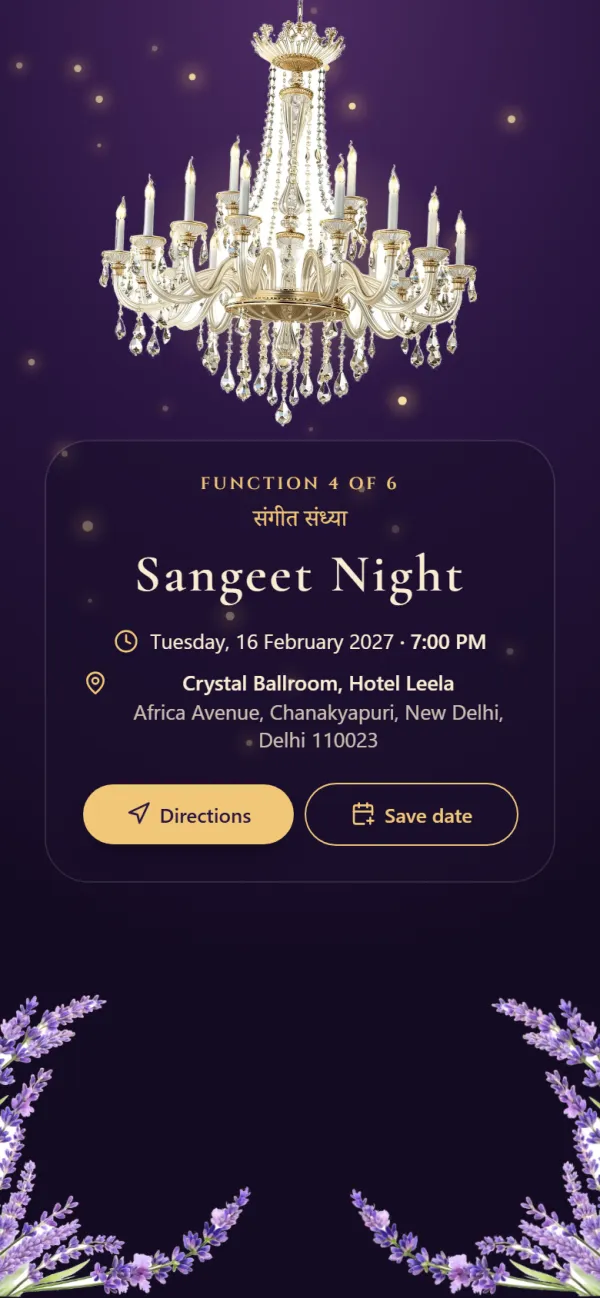
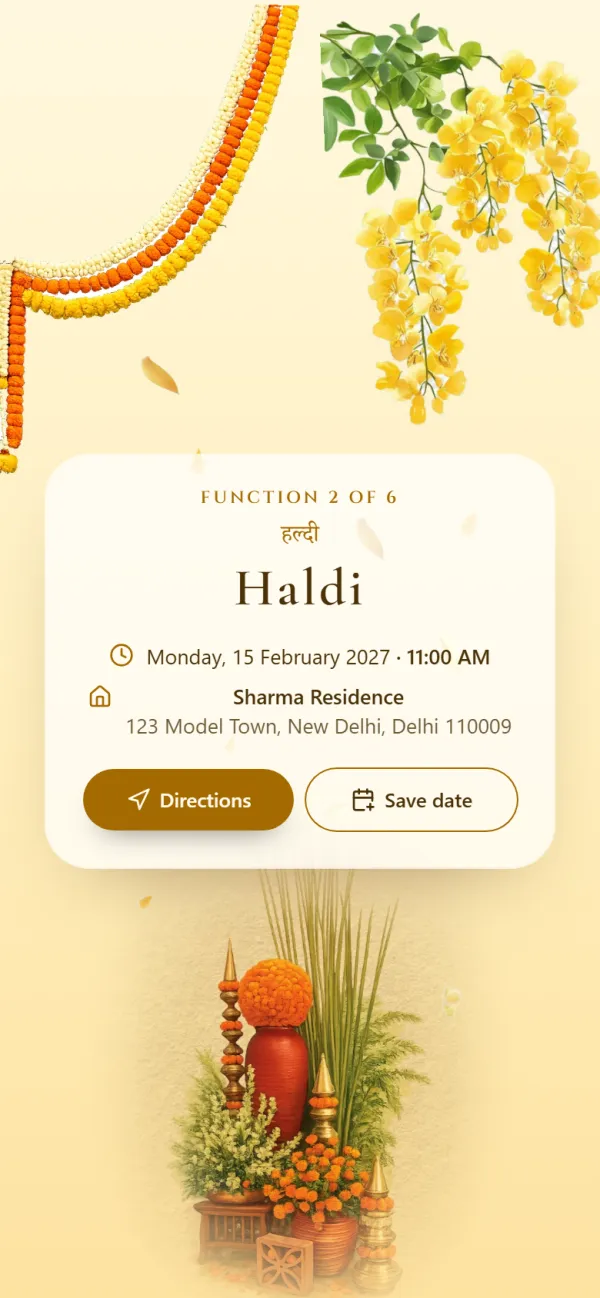
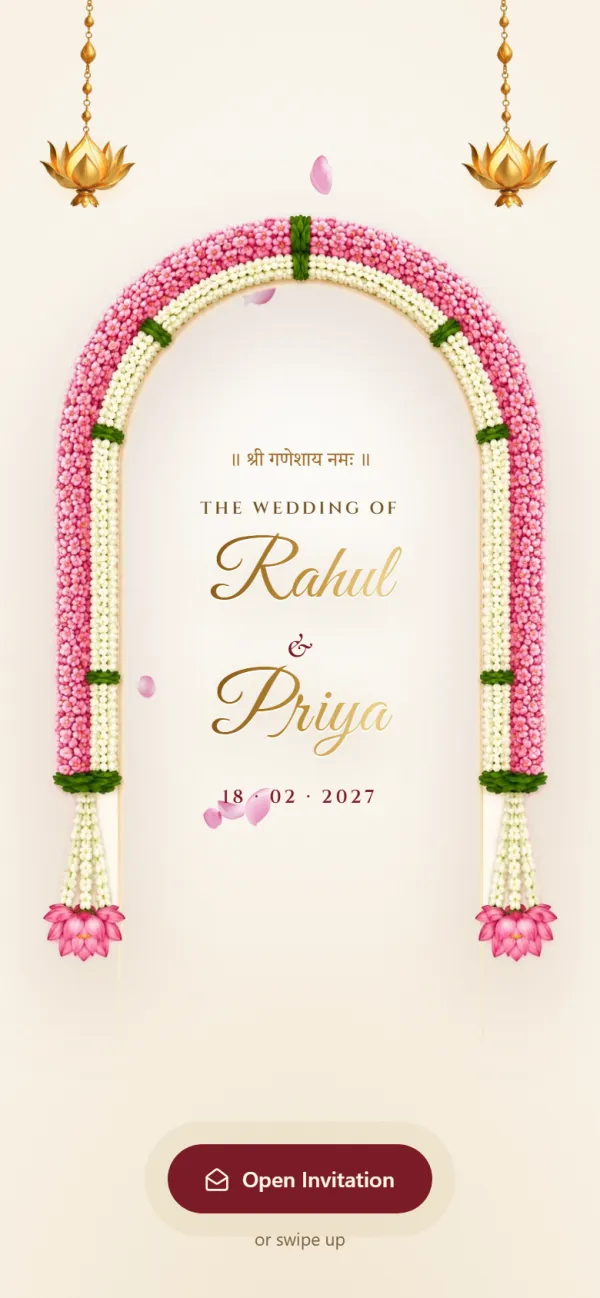
Opens with Shree Ganeshaya Namah and lists every function from Haldi to the reception.
Functions included
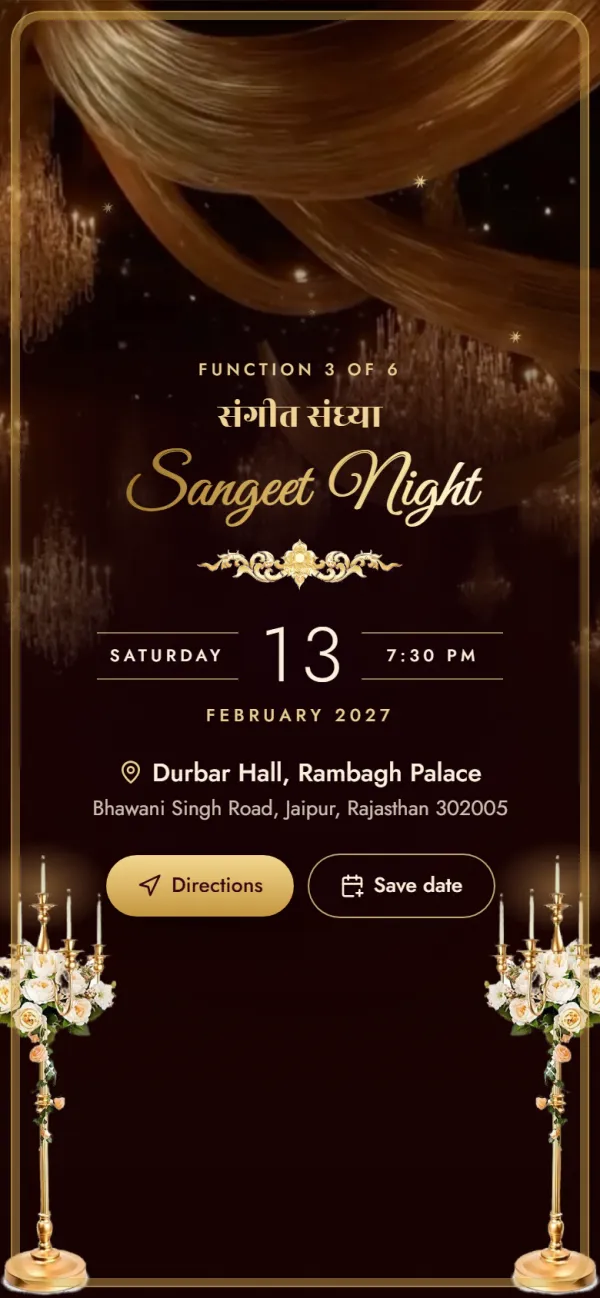
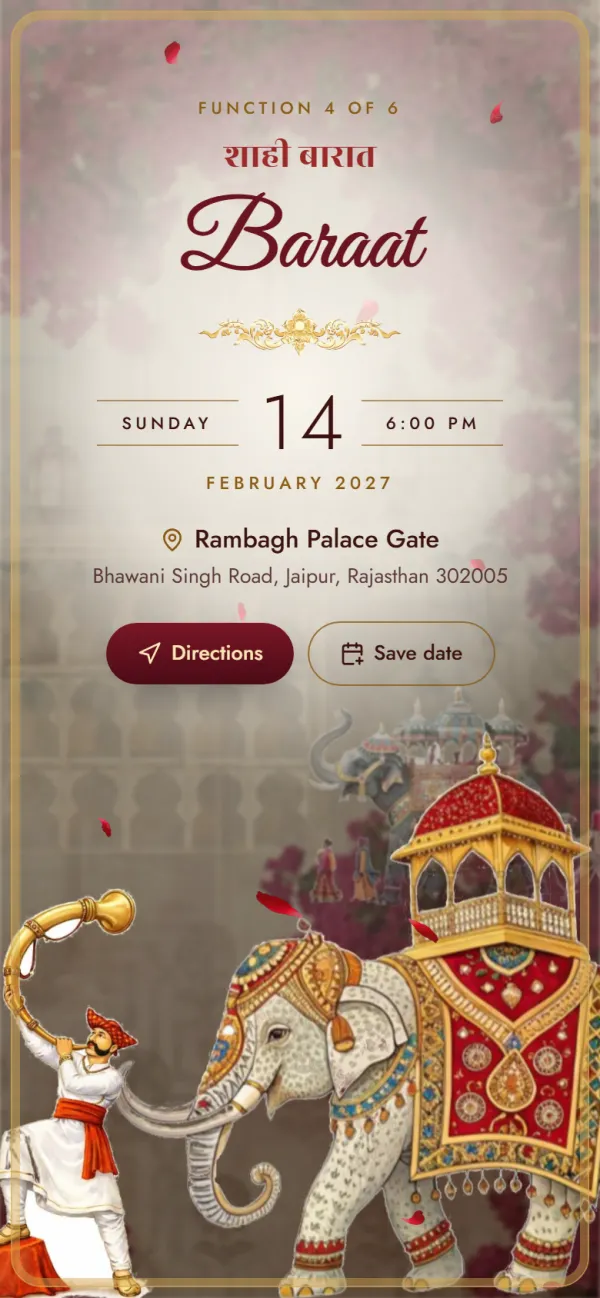
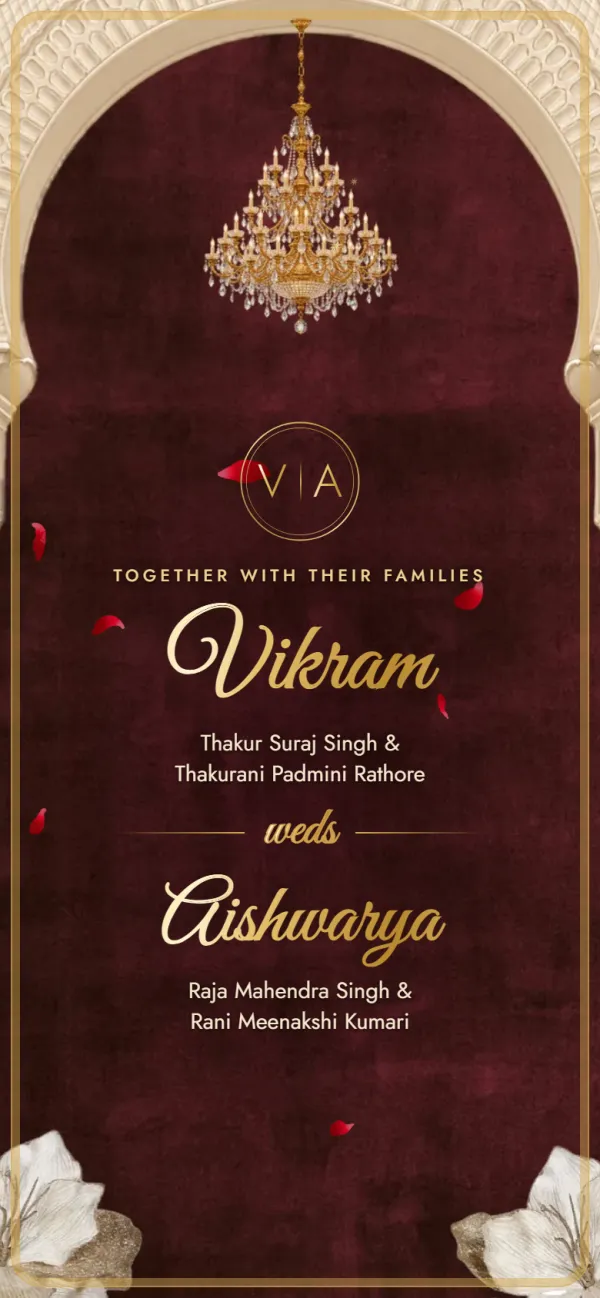
A palace invitation: a sealed letter, velvet curtains and a baraat on an elephant.
Functions included
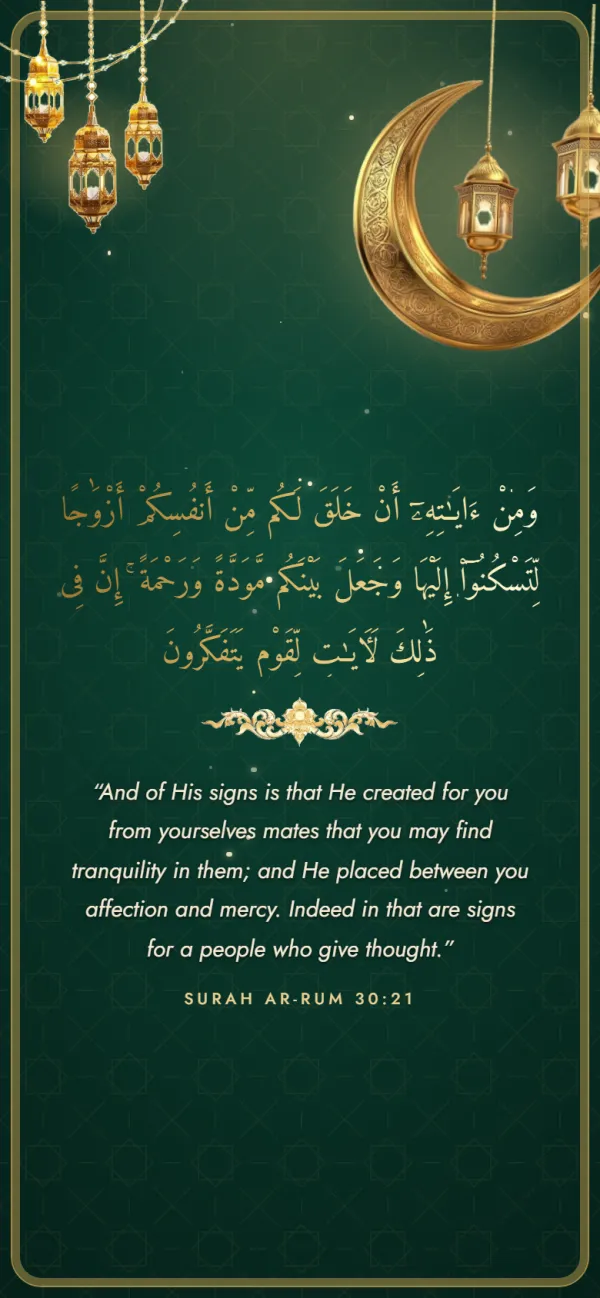
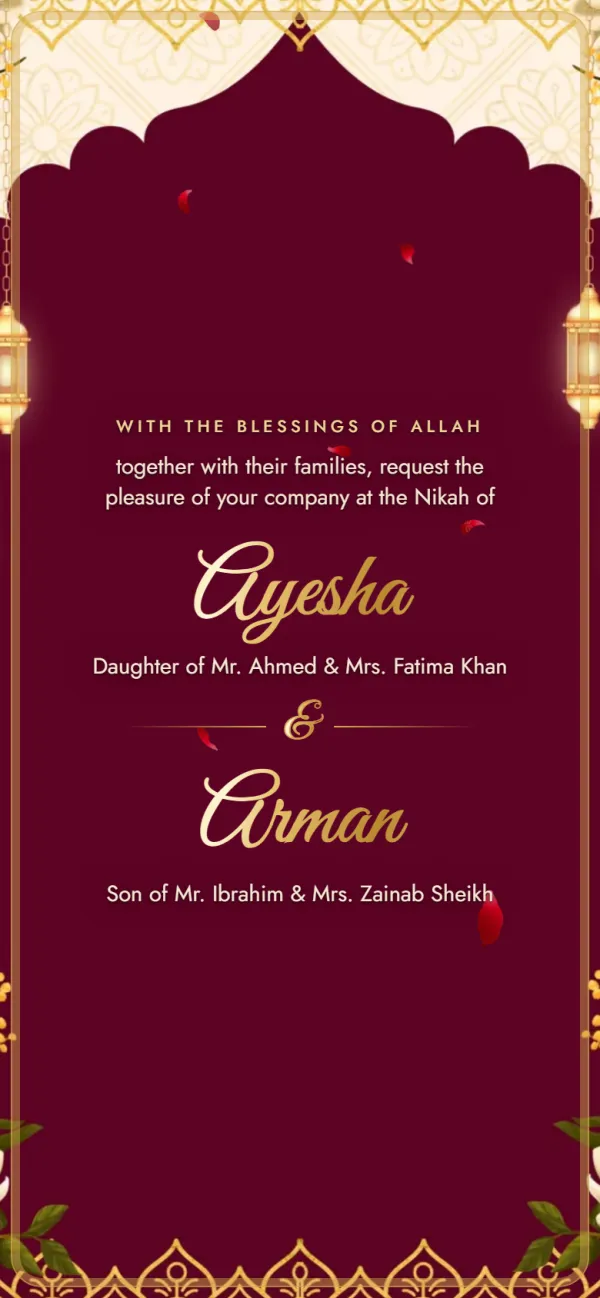
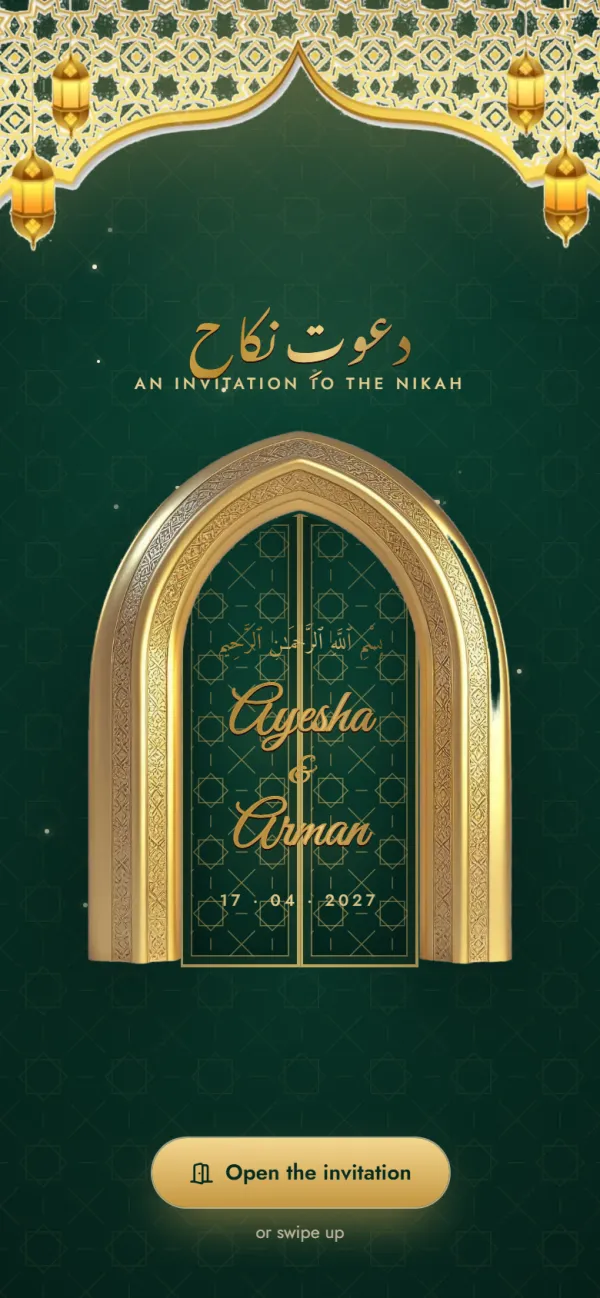
Carved doors open on a night of lanterns, with the Mehndi, Nikah and Walima ready to fill in.
Functions included
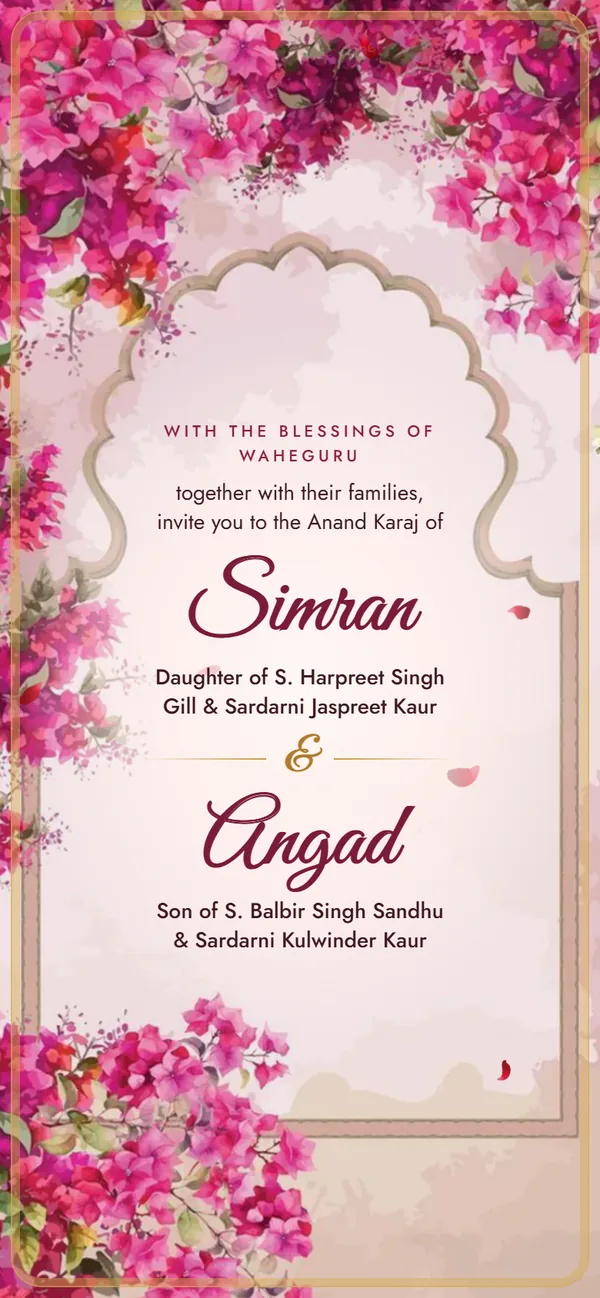
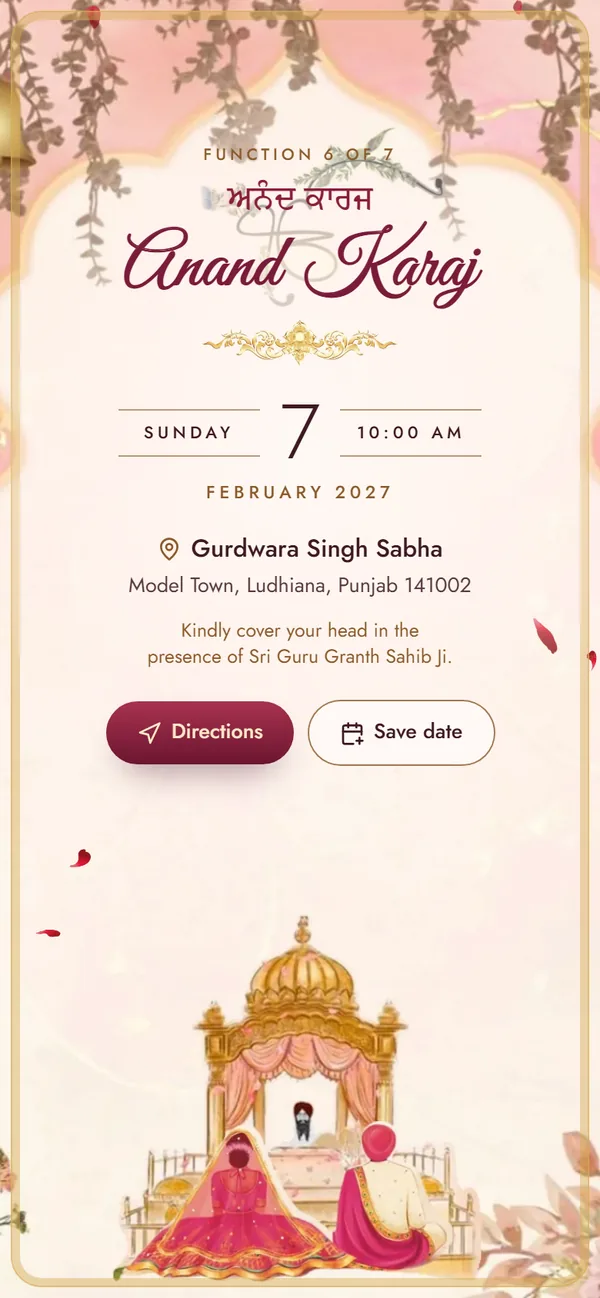
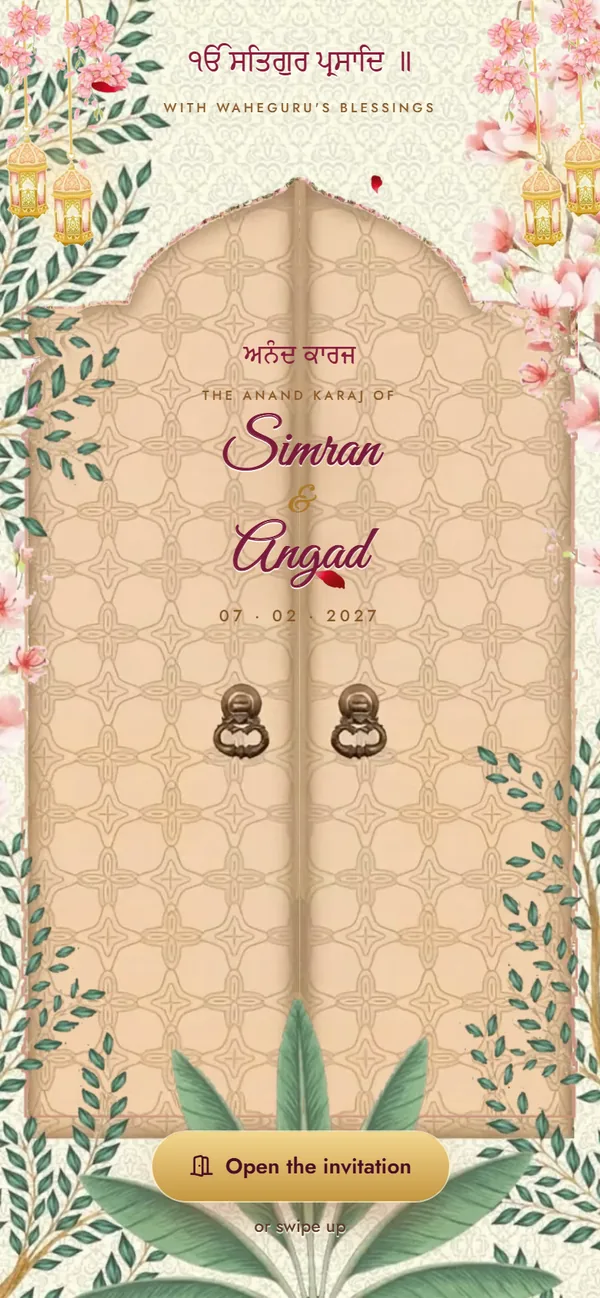
Carved doors swing open on the Palki Sahib: blossoms and gold, the four Laavan, and every function from Path to Reception.
Functions included
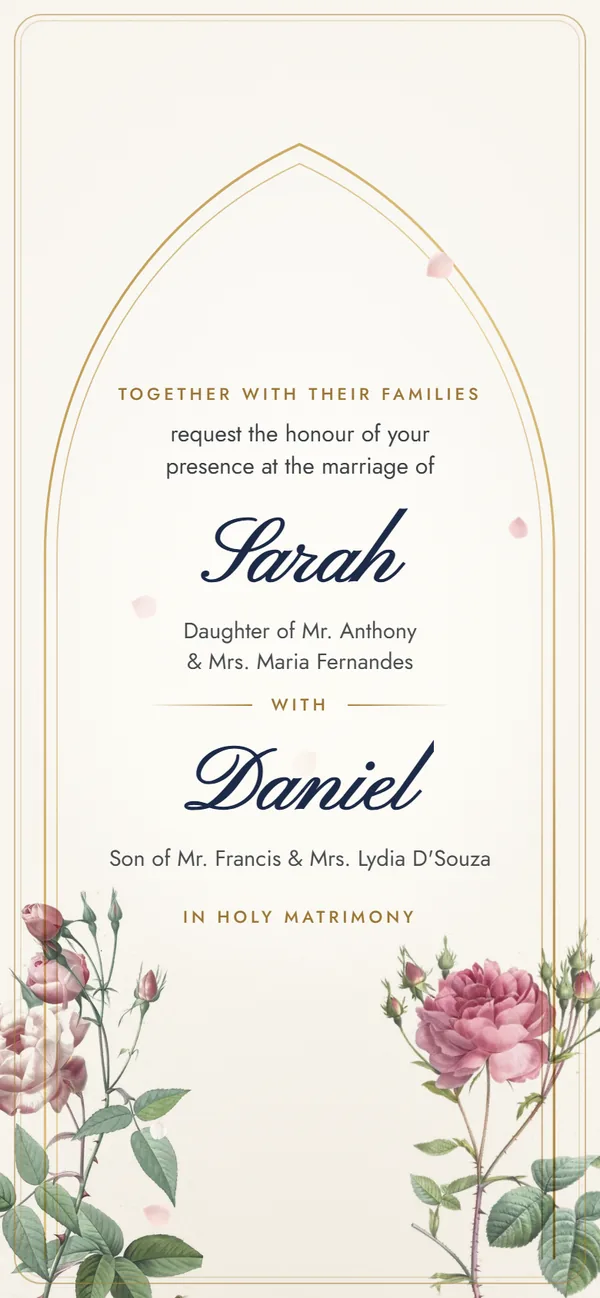
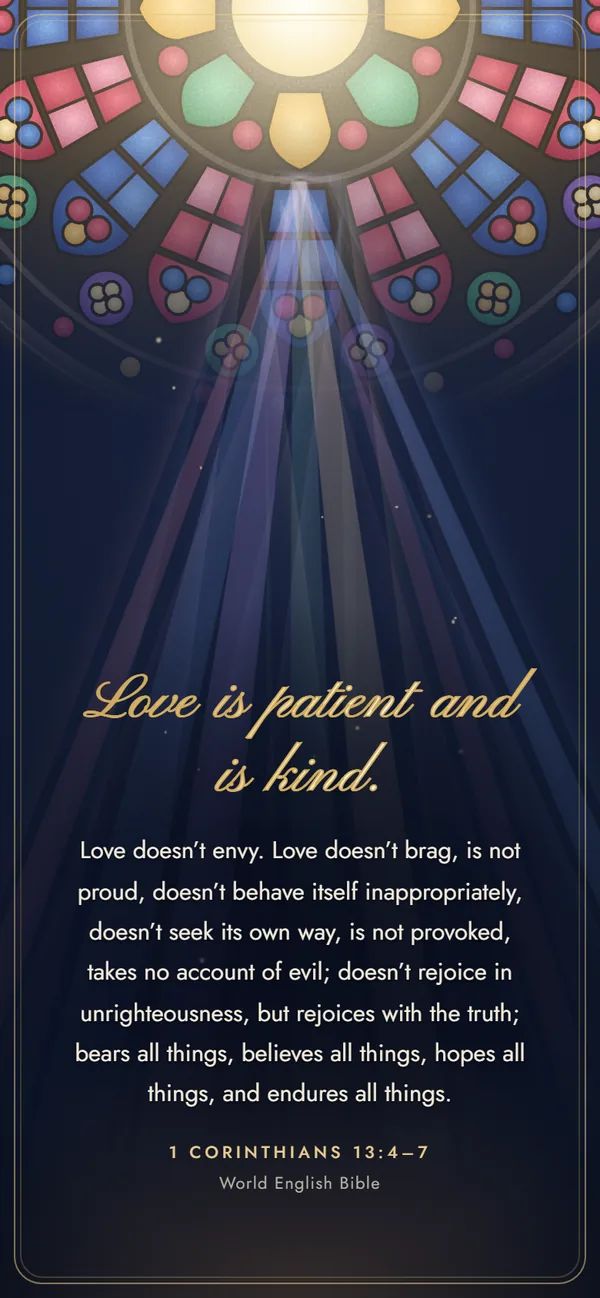
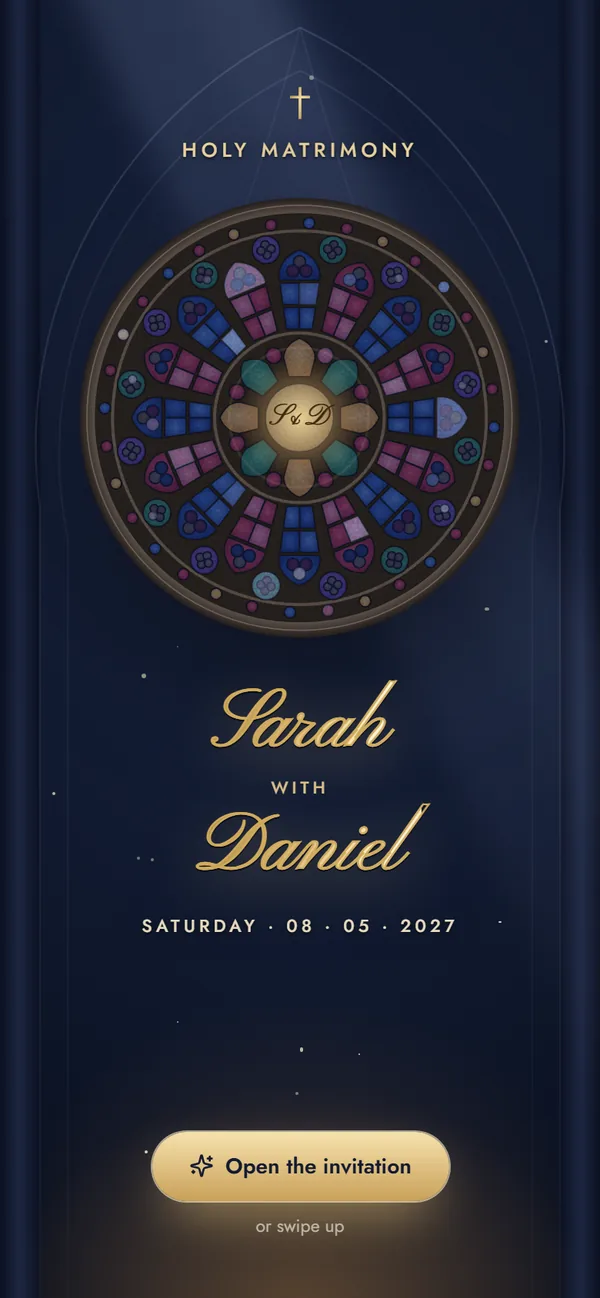
A stained-glass rose window lights up over your names — engagement, Roce, Holy Matrimony and reception.
Functions included
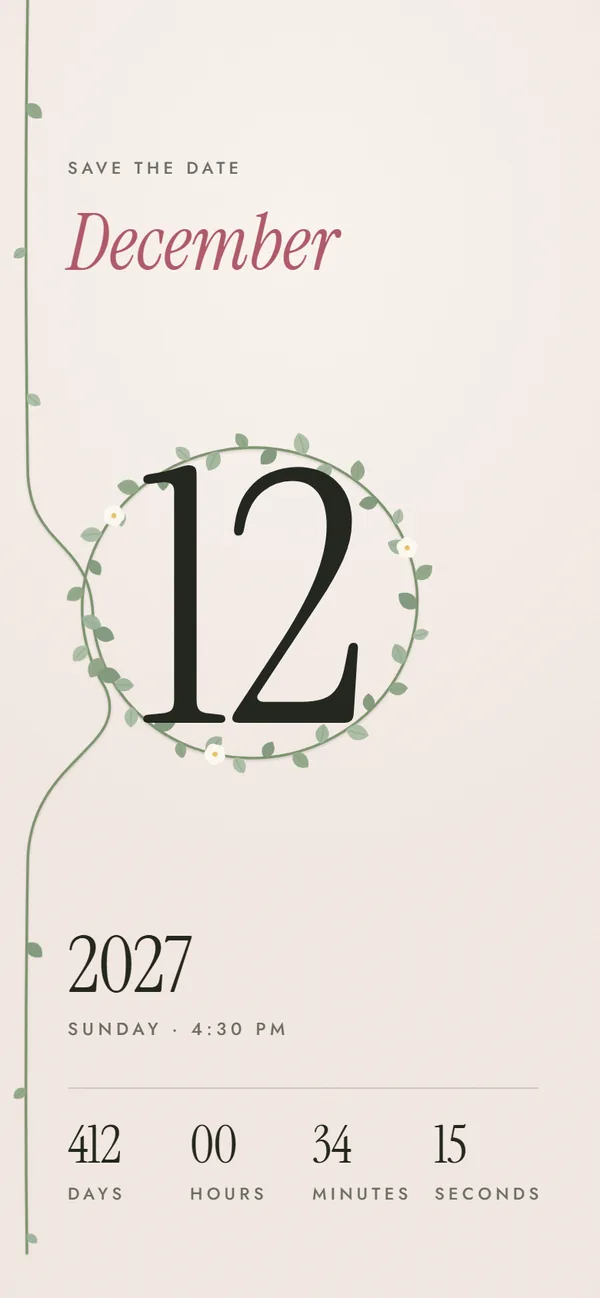
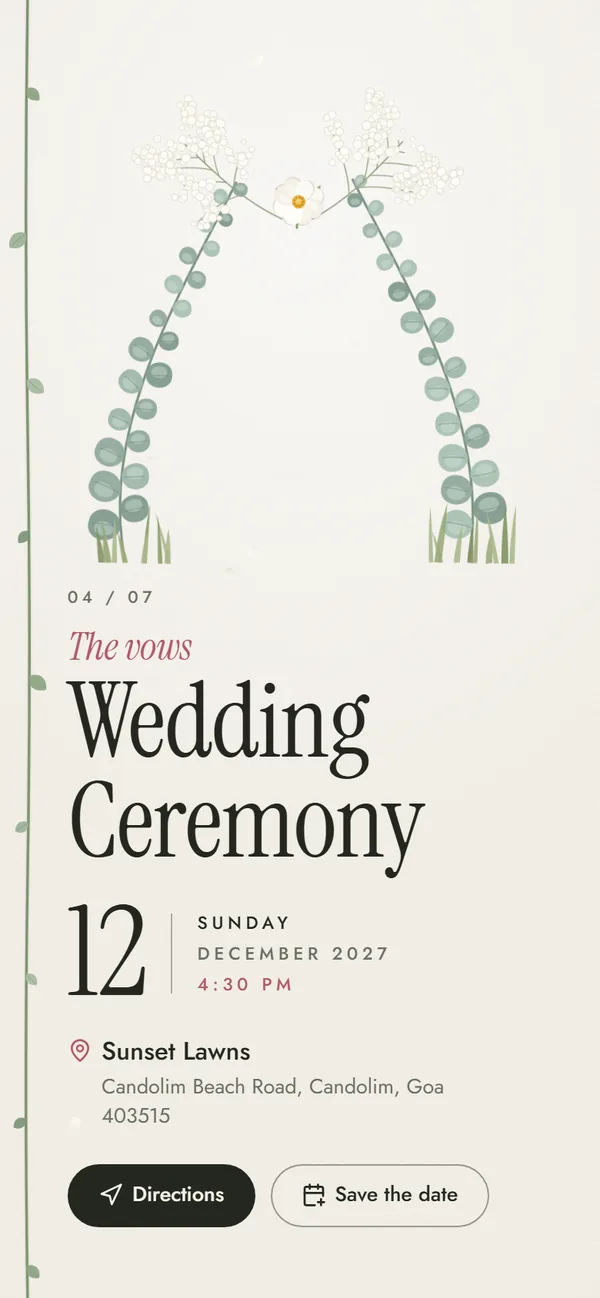
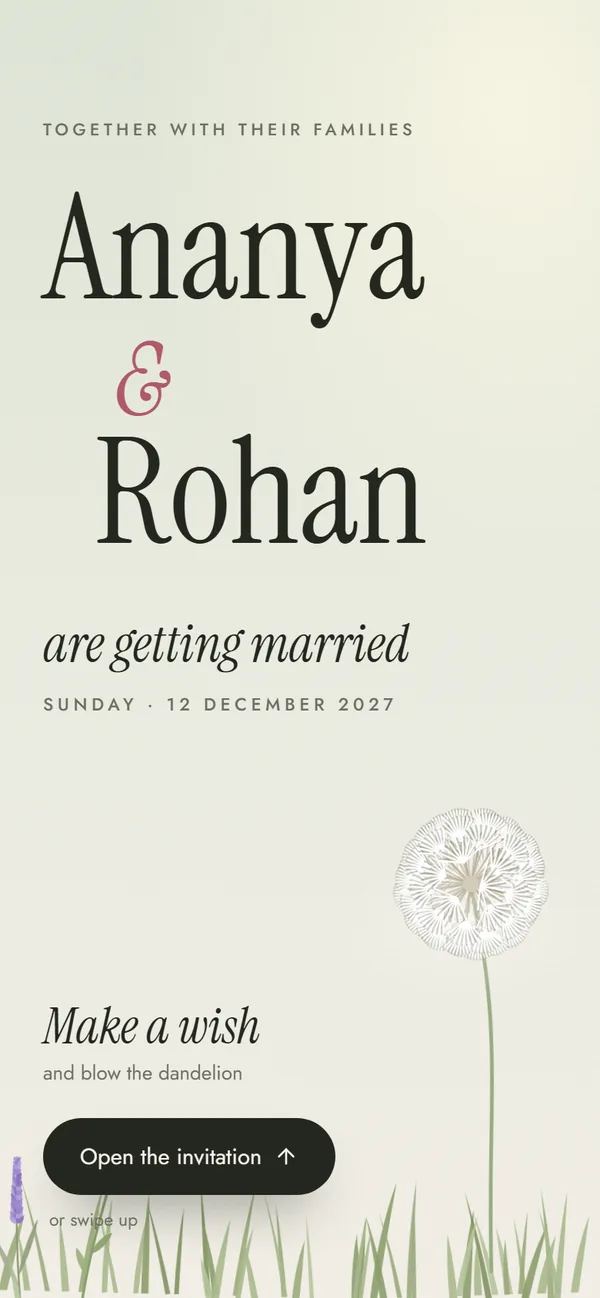
Make a wish on a dandelion, then watch a garden grow — editorial type, no religious text, an hour of the day for every function.
Functions included
Functions, wording and choosing between the two designs.
Both Hindu designs — Hindu Traditional and Hindu Royal — are free to try: design and preview your invitation with no sign-up. Getting your shareable link is a one-time ₹499 (launch offer, usually ₹999) — the same for every design — and it includes edits until the wedding.
Haldi Ceremony, Mehendi Ceremony, Sangeet Night, Wedding Ceremony and Reception. Hindu Royal lists Tilak Ceremony, Mehendi Ceremony, Sangeet Night, Royal Wedding and Grand Reception. Switch off any function you aren't hosting.
Not as extra function cards — each template's list is fixed (Hindu Royal does include Tilak). Add the timing of a Ganesh Puja or the baraat to your welcome message, which appears near the top of the invitation.
Yes. The welcome message, closing message and story show exactly what you type, in Devanagari, English or a mix.
Hindu Traditional has warm amber tones and the classic Haldi-to-Reception list — right for most North Indian weddings. Hindu Royal is maroon and gold, like a palace — velvet curtains, a baraat on an elephant, grander names (Royal Wedding, Grand Reception) and a Tilak — good for palace, haveli or grand hotel weddings. You can switch while editing.
Yes. Open the Hindu Traditional preview to see it with sample details, then start your own from the same design.
Shree Ganeshaya Namah at the top, every function below — ready to share on WhatsApp in minutes.
Free to try
₹499 only when you share